Some invitations you accept the moment they land in your inbox. Enigma 2K26 was one of them. Held at the Rajasthan Institute of Engineering & Technology (RIET) in Jaipur, it was a 24-hour national hackathon that packed the campus with student builders from across India, and I had the privilege of joining the panel as both a Mentor and a Judge.
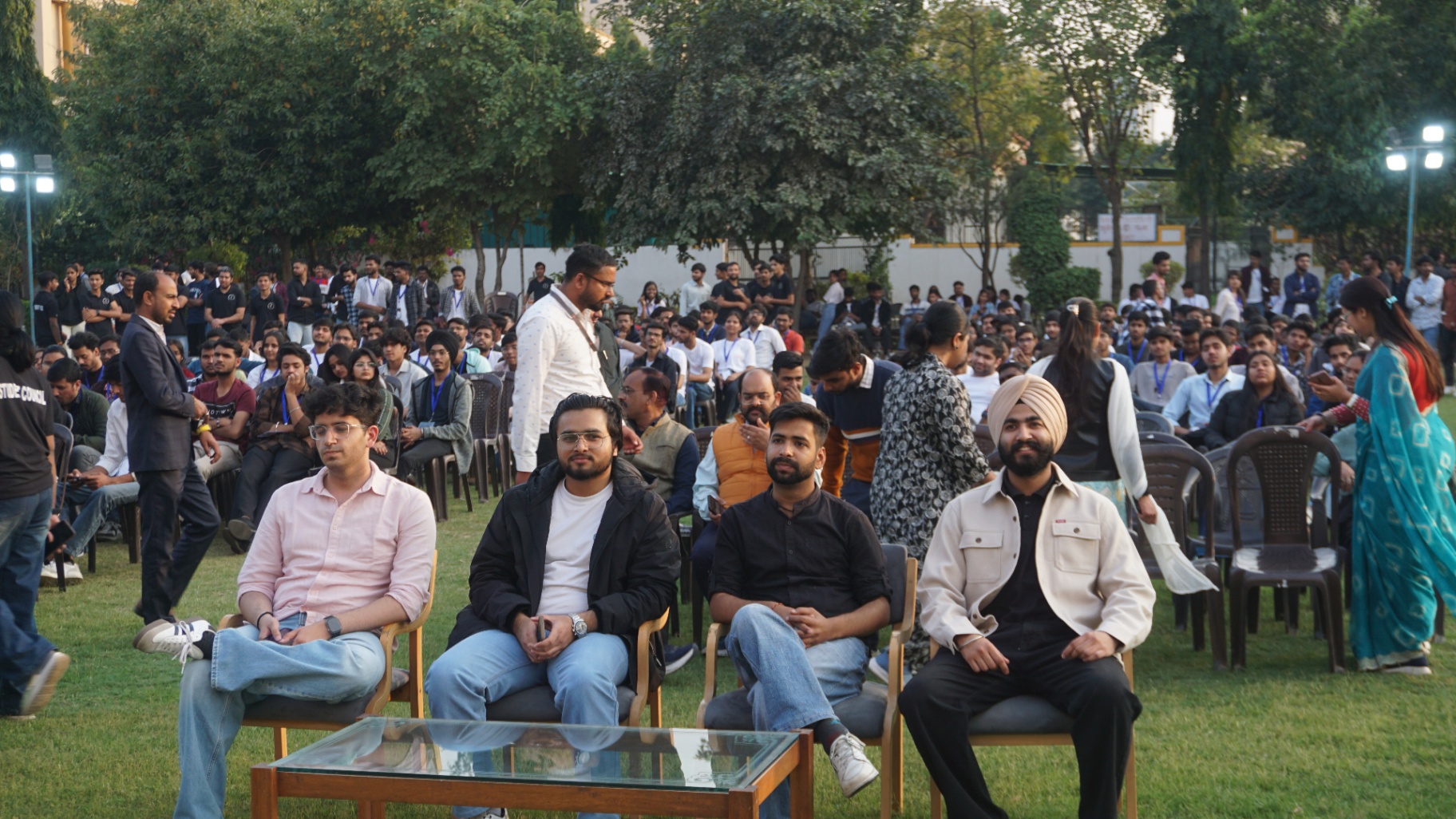
The photograph below is from the mentor's lounge on Day 1 — the moment right before things got wonderfully chaotic. Standing beside me are the other mentors and judges I got to share the room with: Jaskaran Singh, Keshav Bhatt, and Kunal Sangtiani. If you ever wonder why hackathons feel special, it's the company you keep during the long hours. This one set the bar.
Why Enigma 2K26 was different
I've mentored at a few hackathons this year, and the pattern usually goes: high-energy kickoff, mid-night slump around 3 AM, panic sprint at hour 20, chaotic demos. Enigma inverted that pattern. The RIET organizing team ran the schedule so tightly that momentum never dipped — there was a workshop, a meal, a checkpoint, or a mentor round happening at almost every hour. Even at 4 AM, when I did a walk-through of the hacking hall, teams were still whiteboarding architecture instead of staring at Stack Overflow tabs.
A big part of that is credit to the student organizing crew — Nandini, Priyanshu, Anish, and Yashoda — who did not stop moving for the entire 24 hours. I've been on the organizer side myself (more on that in another post about AceHack), so I know exactly how much invisible work it takes to make a hackathon feel effortless from the outside. These four made it look easy.
The mentoring rounds
Mentor rounds at hackathons are a strange craft. You have five to ten minutes per team, you've never seen their idea before, and you have to give them something concrete they can act on before the next mentor arrives. I usually run three quick passes:
- One-line pitch — can they explain the problem and the wedge in a single breath? If not, the demo will suffer, so we fix it right there.
- Riskiest assumption — what is the one thing that, if wrong, kills the project? That's what they should be building next, not the login page.
- Demo path — by hour 22, what will they actually click through? Working backwards from the demo saves teams from over-engineering the backend.
The team quality at Enigma was noticeably above average. I saw a surprisingly polished agentic-workflow tool built in ~14 hours by a team of second-years, a genuinely creative accessibility project that translated Indian Sign Language to text in near real-time, and a fintech idea whose UX I'd happily ship to production tomorrow. Judging the finals was hard in the best way.
Hospitality that actually stood out
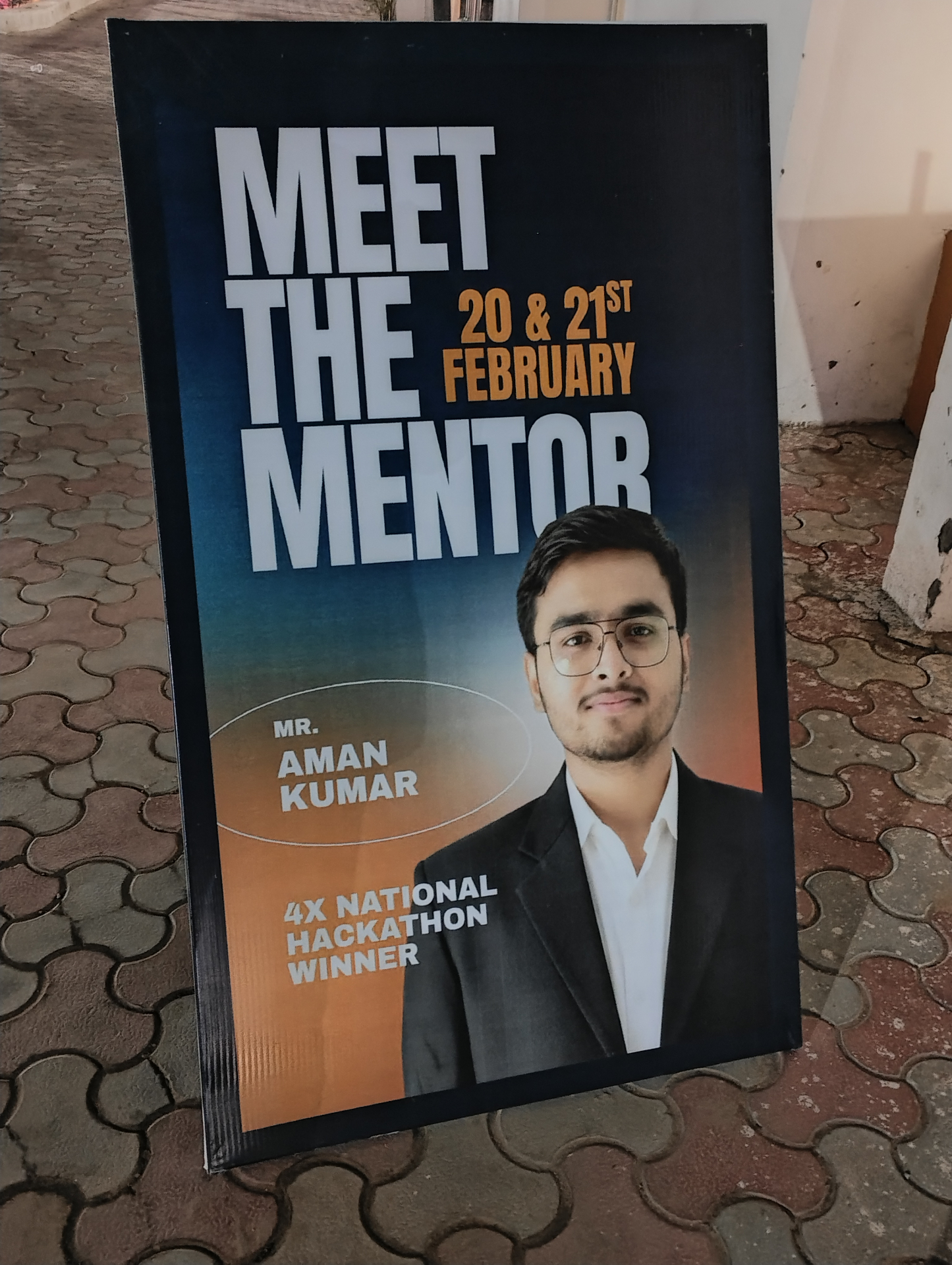
I want to call this out because it's rare: the hospitality was genuinely excellent. Green room stocked, transport on time, food that wasn't just cold pizza and cola, and a student volunteer team that anticipated things before you asked. Small things — a coffee refill during a long judging block, a warm jacket handed over at 2 AM, transport organized to the exact minute — but they add up. The organizing team treated the mentors like collaborators, not props.
You can tell how well a hackathon is run by how quiet the mentors' WhatsApp group is. Ours barely pinged. That's the whole review.
Judging the finals
The judging panel deliberated for well over an hour, which is longer than most panels I've been on. That's a good sign — the top teams were closely matched and every judge wanted to give each project a fair reading. My personal rubric for hackathon judging is simple: problem clarity (25%), execution in the time available (35%), technical depth (20%), and demo storytelling (20%). Big flashy features don't score if the problem is fuzzy; conversely, a small, sharp, working product beats a sprawling half-built one every time.
The winning teams demonstrated all four. Watching them walk on stage after 24 hours without sleep and still nail the demo was the highlight of my weekend.
What I told the closing crowd
During the closing ceremony I got a couple of minutes on the mic and tried to keep it short: the hackathon is not the point. The people you built with, the API you learned to hate at 3 AM, the git-merge nightmare you resolved at 5 AM — those become part of your engineering muscle memory. The trophy is nice; the reflex you build under time pressure is what compounds.
A huge thank you to Nandini, Priyanshu, Anish, and Yashoda for the invite and for running such a tight ship, and to my fellow mentors and judges Jaskaran Singh, Keshav Bhatt, and Kunal Sangtiani for the conversations between rounds. Also to the entire RIET Jaipur team, from the faculty coordinators to the student volunteers who kept the building running around the clock.
If you're a student reading this and wondering whether to sign up for the next Enigma — do it. And if you're organizing a hackathon and want a mentor who won't complain about 4 AM, my inbox is open.