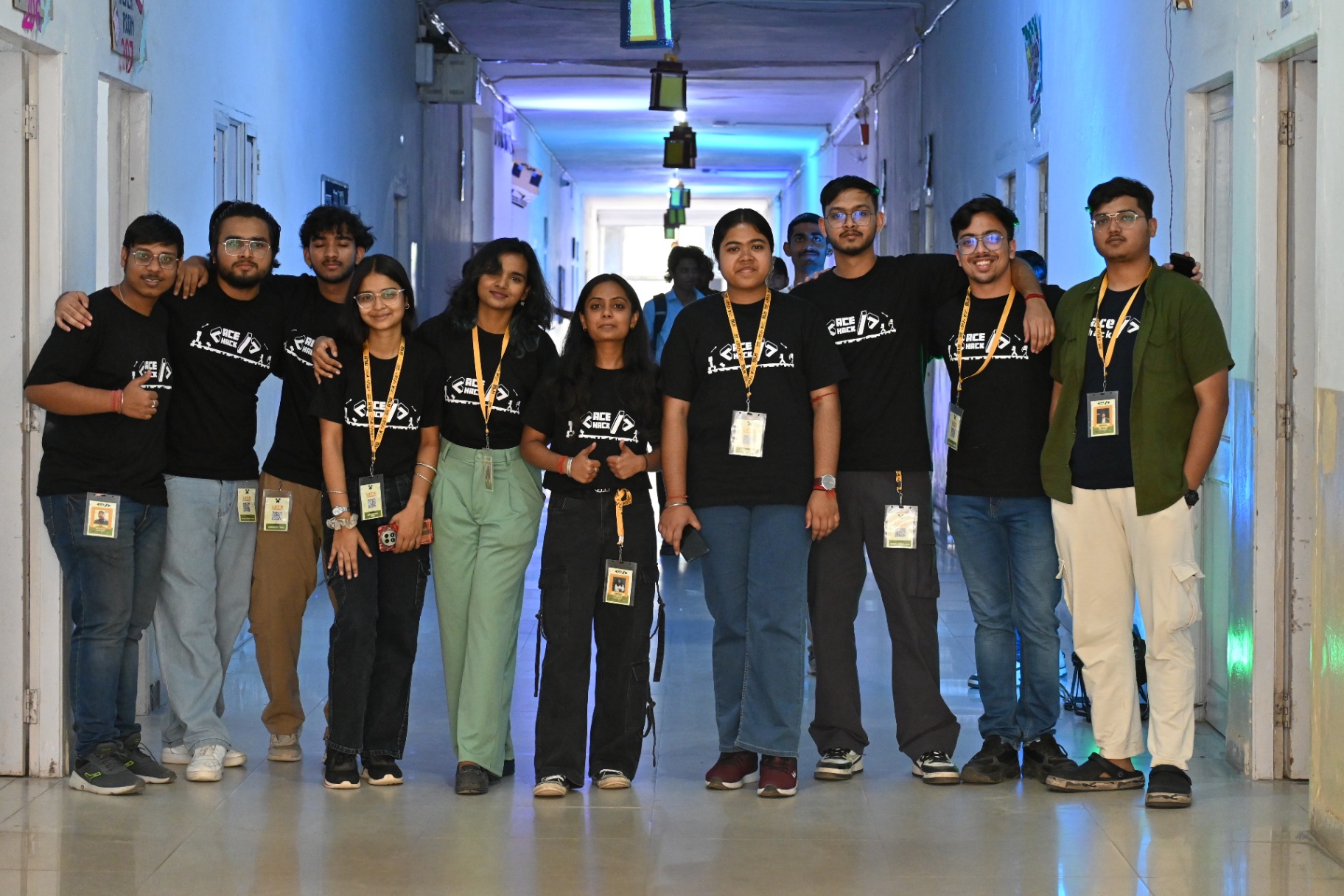
I've written a couple of posts recently from the mentor and judge side of the table. This one is from the other side — the organizing side — and it's about AceHack 5.0, the fifth edition of what has grown into Rajasthan's largest student-run national hackathon. It was held at the University of Engineering & Management (UEM), Jaipur, and event-partnered with Major League Hacking (MLH), the global collegiate hackathon league.
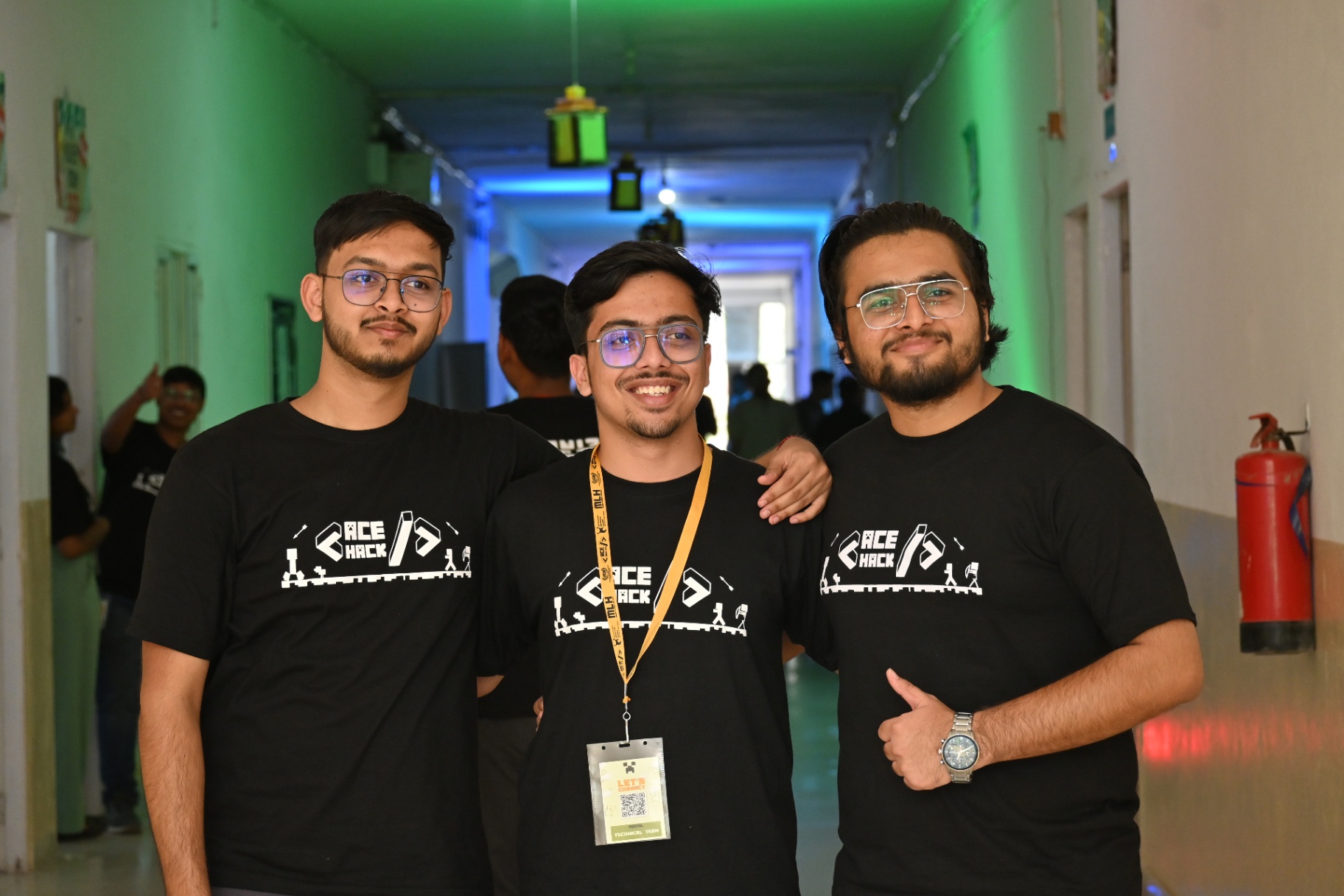
My role this year: core organizer, leading the Social Media team and working across Sponsors & Outreach and Content. It was a lot. It was also the most rewarding thing I've done in a long time.
What AceHack actually is
AceHack started as a student initiative at UEM Jaipur, and over five editions it has grown from a small campus event to a national-scale hackathon that draws teams from across the country. The fifth edition — AceHack 5.0 — was our biggest yet: hundreds of participants, dozens of mentors, an MLH coach on the ground, a serious sponsor deck, and a full weekend of building, workshops, side events, and demos. Being on the MLH partner list is not automatic; it takes a track record and a specific standard of student experience, and AceHack has earned that.
What leading social media actually looks like
'Leading social media' sounds glamorous. In practice, it is a rolling twelve-week schedule of content pipelines, sponsor commitments, launch calendars, and a Notion board that never sleeps. For AceHack 5.0 my team ran the entire outward-facing voice of the hackathon — announcements, sponsor spotlights, mentor and judge reveals, live coverage on event days, and the post-event recap.
- Pre-event (weeks -12 to -4): brand identity refresh, teaser content, sponsor logo reveals, mentor and judge spotlights.
- Registrations phase (weeks -6 to -1): daily posts, referral campaigns, ambassador program, and community collaborations.
- Event weekend: live coverage across Instagram, LinkedIn, X and WhatsApp — reels, stories, sponsor call-outs, and moment marketing.
- Post-event: recap video, results announcement, thank-you posts to every single stakeholder, and the after-report to sponsors.
The under-appreciated skill here is not writing captions. It's building a machine that keeps producing on schedule when you personally are asleep, sick, in an exam, or handling a fire on the sponsor side. By AceHack 5.0 we had that machine, and it hummed.
Sponsors & Outreach — the invisible work
The Sponsors & Outreach side is where the hackathon economically exists. Prize money, MLH partnership fees, swag, food for hundreds of participants, venue upgrades — none of it materializes without sponsors. I got to work alongside our sponsors lead on outreach, deck iteration, follow-ups, and on-ground delivery of sponsor deliverables during the event.
A few honest lessons from a season of this:
- A great deck opens the first meeting. Delivery on your promises opens the second one next year.
- Sponsors don't fund events, they fund outcomes — reach, hires, developer mindshare. Frame the ask accordingly.
- The 'small' logistical asks (a booth of the right size, a specific speaking slot, a table near the entrance) are what sponsors actually judge you on. Not the giant banner.
- Local and regional sponsors are underrated. They convert faster and renew more reliably.
Content — the third hat
Content overlapped with social but with a different remit: the participant guide, the mentor handbook, the sponsor kit copy, the website copy, the emcee script for the ceremonies, and the video scripts for our recap reel. Content is the connective tissue between what the hackathon is and what people remember it as. When people say 'AceHack felt professional,' 99% of the time they mean 'the words and visuals told a coherent story.'
Being an MLH event partner
Working under the Major League Hacking event partnership brings a specific quality bar to the event — code of conduct enforcement, participant experience standards, judging rigor, and the presence of an MLH coach on the ground who is a genuine mentor to the organizing team. It also plugs AceHack into a global network of collegiate hackathons; participants from AceHack often go on to HackMIT, HackHarvard, and MLH's global events. The partnership is a stamp, and it also is a school for the organizing team.
MLH doesn't just partner with events. They partner with organizing teams and make them better. AceHack 5.0 was measurably better than 4.0 because of it.
Thank yous — the real ones
There is no way to make this section short, so I won't try. Thank you to every sponsor who backed AceHack 5.0 — every logo on the website represents a conversation, a follow-up, a contract, and a delivered promise. Thank you to every mentor and judge who spent their weekend guiding teams and adjudicating with care. Thank you to our MLH coach for the on-ground support and for the mentorship the organizing team got behind the scenes.
Special thanks to our lead, Rakesh Bangra. Anyone who has been near a large student-run event knows that these things live or die by the person at the top — the one who holds the vision, absorbs the pressure, and quietly makes the impossible calls. Rakesh did that for AceHack 5.0. The rest of us got to do our jobs well because he did his job harder.
And thank you to the participants — the several hundred students who traveled, coded, slept on the floor, demoed on stage, and made the whole weekend actually mean something. AceHack exists because you show up.
What's next
AceHack 6.0 is already in early planning. I don't yet know what my role in that will be, but I know the bar is higher because of what 5.0 delivered. That's how these things work — every edition inherits the standard the previous one set, and the students who take over next year will raise it again.
If you're a student at UEM Jaipur or in Rajasthan and you're thinking about joining the AceHack team, do it. It will be the most compressed leadership education you'll get in college. And if you're a sponsor looking to reach serious student builders in North India, you already know where to find us.